If you’re a mid-sized service-based business with a small team—or no dedicated marketing person at all—chances are you’ve been advised at some point to “just post on social media” or “write a few blogs” to get more customers until you can afford a dedicated marketing person. But does that really work? And more importantly, will posting daily on social media consistently drive traffic to the point that you can afford a real marketing strategy? What about boosting posts or running paid ads on Facebook and Instagram?
The short answer, no.
Welcome to your guide to organic marketing—a smart, sustainable, and strategic way to build visibility and bring in leads without paid advertising.
What Is Organic Marketing?
Let’s start with the basics.
Organic marketing refers to any unpaid marketing effort that helps you attract and retain customers over time, build brand awareness, and ensure the longevity of your marketing efforts without consistently setting aside revenue for an ad budget.In short, organic marketing efforts are those that don’t require additional spend. They are things done organically to grow your business This includes:
- Content Marketing and SEO
- Social Media Marketing
- Email Marketing
- Webinars and Other Lead Capture Strategies
- Case studies and Testimonial Content
- Podcasts and Video Content
- Online Communities & Forums
Unlike paid marketing—which uses dollars to place ads on platforms like Google, Meta, or LinkedIn—organic marketing focuses on building trust, credibility, and long-term visibility by offering value-driven content.
Organic vs. Paid Marketing: What’s the Difference?
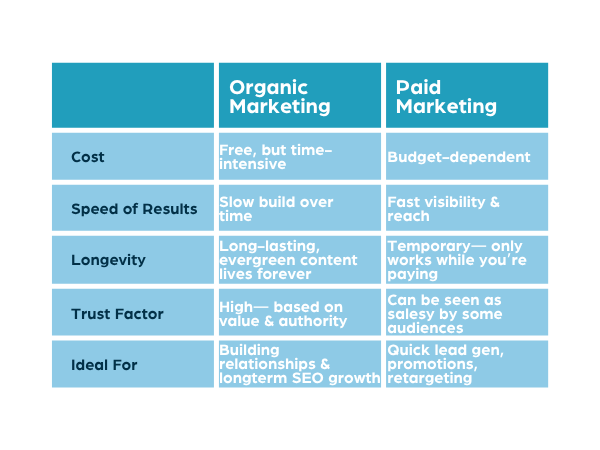
Many small or mid-sized businesses jump straight to ads because they want fast results—but ads are like a faucet. Turn off the spend, and the traffic stops. Organic marketing, on the other hand, is like a garden: plant it now, and it keeps bearing fruit.
Why Organic Marketing Is a Smart Move for Lean Teams
If you’re juggling marketing tasks on top of your actual job—or you’ve handed off your Instagram to your admin assistant—organic marketing may feel like a pipe dream. But here’s why it’s worth your time:
- Low-Cost, High-Impact: You don’t need a massive budget to start. Just a strategy and consistency.
- Builds Brand Equity: You’re not just promoting a service—you’re positioning yourself as a trusted authority.
- Improves Lead Quality: Organic leads are often warmer because they’ve engaged with your content and already trust your brand.
- Sustainable Over Time: A well-optimized blog post or email funnel continues to work long after you’ve created it.
Let’s break down how to get started.
How to Drive Organic Traffic: Step-by-Step Guide
1. Audit Your Foundation First
Without solid infrastructure in place, your digital marketing efforts are wasted. Before investing time into driving traffic, you first need to ensure that your marketing channels are in place and are a strong representation of your business.
Website Audit:
Before posting more content, make sure your core digital assets are optimized:
- Is your website clear, modern, and easy to navigate?
- Does your homepage clearly explain who you are, what you offer, and who you serve?
- Is there a way for visitors to take action (like booking a call, downloading a resource, or joining your email list)?
Social Media Platforms Audit:
- Do your profile bios clearly explain your brand, what you offer, and who you serve?
- Is your profile SEO optimized, leveraging appropriate keywords throughout?
- Is your branding clear and consistent across platforms and profiles?
Email Marketing Platform Audit:
- Do you an email marketing tool in place and a lead capture form or landing page embedded on your website and linked through your social profiles?
- Do you have a welcome email automated and ready to nurture new leads?
- Is your branding consistent with your website and social platforms and ready to deliver a recognizable brand encounter?
2. Create SEO-Optimized Content
Search engine optimization (SEO) isn’t just for techies or bloggers. It’s one of the most effective ways to attract your ideal audience for free. Creating optimized content is the process by which you get your website ranking organically, or in organic search, for the keywords you have identified as relevant to your business and target audience. When your website ranks for relevant keywords, you see higher, more qualified website traffic.
Start by:
- Conducting keyword research (using a tool like Ahrefs or Semrush) and identifying which keywords your ideal clients are searching for (e.g., “HR compliance for small businesses” or “best commercial landscaping company in Dallas”) that you would like your business to show up for in Google SERPs (search engine results pages)
- Creating high-quality relevant content that answers those questions
- Optimizing metadata, headers, and internal links for search engines (aka on-page SEO)
- Create a plan for on-going content creation and optimizing content periodically to keep it relevant. Even posting one new blog a month can help you build long-term organic traffic.
3. Show Up On Social—With a Strategy
Social media posts should aim to entertain, educate, and/or engage. Don’t post just to post. Focus on:
- Serving your audience with educational tips and valuable content and resources that solve their problems, and are related to your products or services.
- Bring your potential customer behind-the-scenes with content that allows them an insider view and a feeling of connection with your brand.
- Build trust by sharing client success stories and case studies.
- Always include easy-to-follow calls to action (book a consult, download a resource, etc.)
You don’t need to be on every platform. Choose 1–2 channels where your audience spends time and show up consistently. If your content formats work across various platforms, such as Instagram, TikTok, and YouTube Shorts, and you have the man power or the automation tools to post across platforms, take advantage of these opportunities to spread your reach.
4. Use Email Marketing to Nurture Leads
Email marketing is one of the best, and most cost effective, marketing tactics for reaching prospective customers to sell products and services, and grow your brand awareness. If someone is on your email list, that means they have, at one point or another, signed-up and opted-in to receiving communications from you. In other words, THEY WANT TO HEAR FROM YOU.
Use email marketing to:
- Stay top of mind and build brand awareness
- Share new blog posts or helpful resources with potential customers
- Re-engage past customers
- Promote sales events, webinars, and more
- Offer exclusive tips or downloads
- Nurture leads
Not sure where to begin? A welcome email sequence and a monthly newsletter are great ways to warm up a cold list and begin to move leads down the sales funnel.
5. Repurpose, Don’t Reinvent
One of the best ways to save time on organic marketing is to repurpose your content. Repurposing content, in other words, means recycling content pieces across various platforms.
For example, take an SEO blog you, and distill that down to an infographic for email, and a piece of video content that can be shared on social media. Turn a case study into an email series teaching your subscribers how to repeat your process and see similar results, then turn that same case study into a video reel series scoring new customers by sharing how they can implement something similar to drive their own business success.
Savvy marketers don’t work harder, they work smarter. Creating high-quality content does not require constantly spinning your wheels. A few solid ideas can create content for a week, or even a month. And for many businesses, you can get great mileage from the content you already have.
6. Consistency is Key
Successful marketing campaigns are those that lock in and show up. Your online presence doesn’t have to be a fancy production. Showing up consistently and with goals that align with your larger digital marketing strategy is enough to get the ball rolling.
Focus on a variety of types of content (blogs, white papers, images, short form video, email, etc), provide a strong cross-platform user experience and consistent brand presence, show up to serve, not just sell.
Organic Marketing Takes Time—But It Works
Yes, organic marketing takes more time up front. You won’t wake up tomorrow with hundreds of new leads just because you posted a blog or reel.
But here’s the thing: The compounding effect of consistent organic content is real.
Over time, you’ll see:
- Higher-quality leads
- Improved search rankings and domain authority
- Increased Brand Awareness
- More referral traffic
- Better engagement with your audience
- Lower cost per lead (because they’re coming in for free!)
Final Thoughts: Start Small, Show Up
If you’re a service-based business without a full marketing team, organic marketing might feel out of reach. But it’s not. With a clear plan, a little consistency, and a willingness to play the long game, you can grow your visibility—and your client list—without ever pressing “Boost Post.”
Need help building a strategy that works without ad spend?
Let’s talk. Our boutique agency specializes in helping growing businesses like yours build sustainable marketing systems that actually work.